
Another Place
Another Place: What an Art Installation can Teach us about Humanity, Nature, Presence and Longing
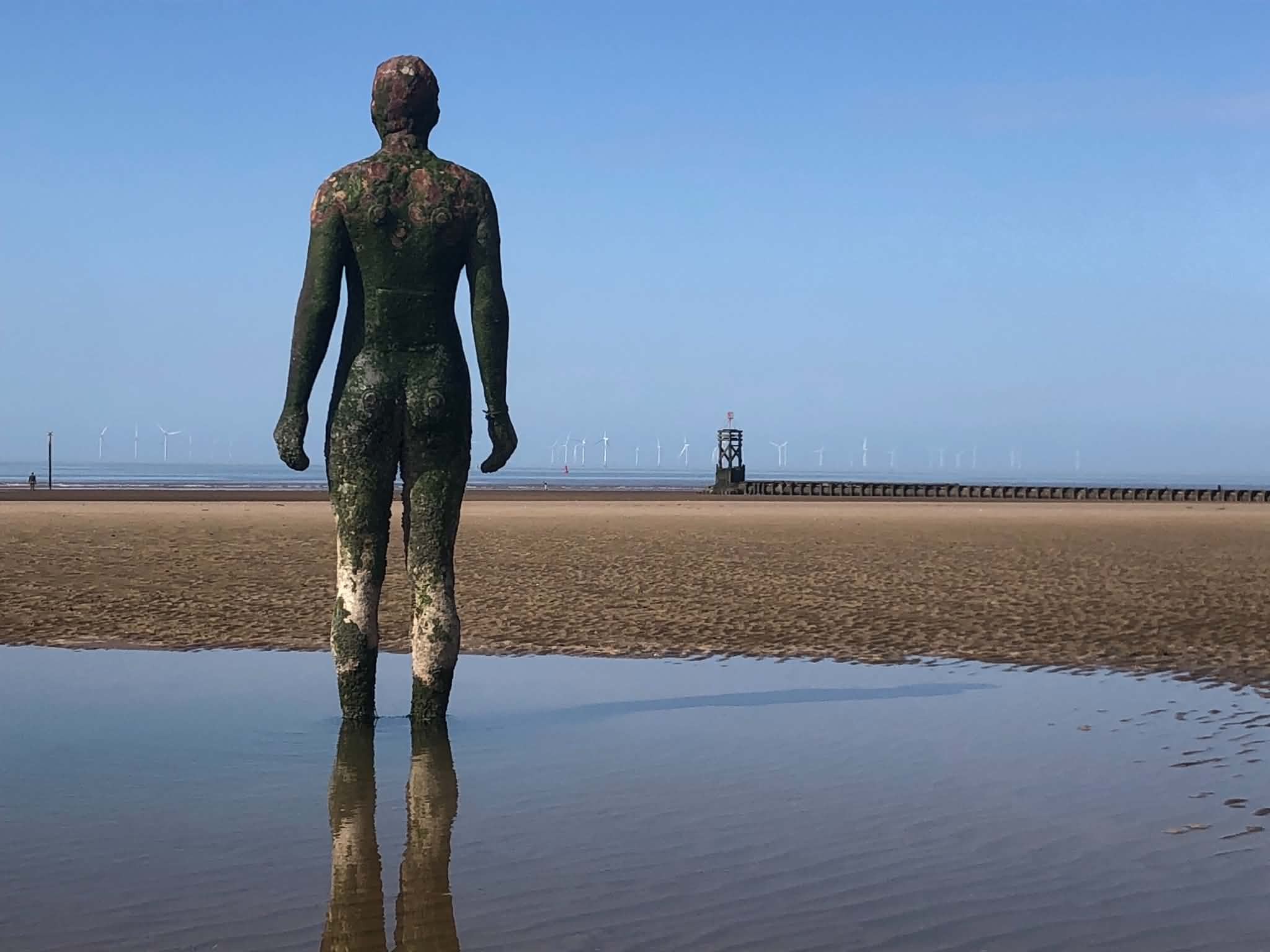
Laura Green (CF Companion) writes… Over the Easter period, I was fortunate enough to be able to visit Antony Gormley’s iconic work, Another Place, for the second time. Located at Crosby beach near Liverpool, the piece comprises 100 life-size statues, all facing out to sea, placed at 250 metre intervals across a 2 mile stretch of sand.
There is something deeply compelling about the work, reflected in its popularity and that permission has been granted for the installation to remain permanently. Each statue on its own is nothing remarkable, yet collectively these eery figures conjure a sense of wistfulness and sublimity.
As I spent some time reflecting on the installation, I noticed how it brings together seemingly opposing ideas in a stark way that both surprises and captivates the viewer.
One example is the contrast between stillness and movement. The iron bodies remain perfectly still- utterly immovable- amidst a constantly shifting landscape of changing sky and ebbing tide. This was a gentle reminder to me, particularly in our presently unsettling times, that it is possible to stay firmly grounded in our foundation- God- while all around us life can feel very transient and even chaotic.
Also striking is the juxtaposition of the human-made and the natural. Unlike much art, which is viewed in galleries, urban spaces or restricted areas, Another Place is immersed in nature. Interacting with the art, you are invited to leave civilisation behind as you walk the distance out to sea to view the furthest statues when the tide is out. This reminds me that it is possible for humans to coexist with the rest of nature without damaging, exploiting and destroying it.
Whether it’s their size, or solidity, I’m not sure, but the figures definitely possess a profound presence. Yet at the same time, with their collective gaze, they seem to be yearning for something beyond themselves. I think this visually represents the experience of those on the contemplative way. We practice being present in the now, yet remain open to mystery and new insight. We also embody the tension between contentment and longing, as these statues seem to do.
These entities are witnesses. A constant presence on the shoreline. They watch flocks of waders fill the sky and disappear just as quickly. They watch on sunny days when children race onto the sand, laughing gleefully, and they watch on days when inky storm clouds fill the skies and the beach is barren and empty. Their forms, covered in barnacles and seaweed, tell the story of their existence over time. There is something comforting about this. Perhaps it points to the Divine, continuously watching over our comings and goings- witnessing our pain and our joy.
If you haven’t visited Crosby, it’s worth the journey to experience this inspired piece of art. I wonder what you might discover, or remember, as you witness Another Place?